


Events, Protocol, Good manners e Business Etiquette.
They are connected fields, because they revolve around the same elements: attention to people, respect for context, and the way we move through words, gestures and details.
This is where the idea of “Languages of Attention” was born for me: not a label, but an approach.
A way of reading and managing communication according to the context you're addressing, with practical tools to create order without rigidity, avoid unnecessary missteps, and make relationships flow more smoothly: in a company, at an event, on a formal occasion, or in everyday life.
I work on all of this with a concrete, practical approach, because it often takes very little to feel at ease and to make others feel the same and to make everything flow better: behind what many call “rules” there is almost always applied common sense, and a precise reason.
And since it's impossible not to communicate, we might as well do it well.
Events
Care that can't be improvised
Every event has a precise objective and a specific audience.
The work starts here: understanding the context, the expectations,
the right tone. Only with this foundation is it possible to build something that truly works — not only on an organisational level, but in the way
it is experienced and remembered by those who take part.
Strategy, creativity, attention to detail are not separate phases:
they intertwine from start to finish, in every choice.
Large numbers or small groups, corporate events or institutional moments: the approach doesn't change.
The direction is always one: yours.

Protocol
Form and substance
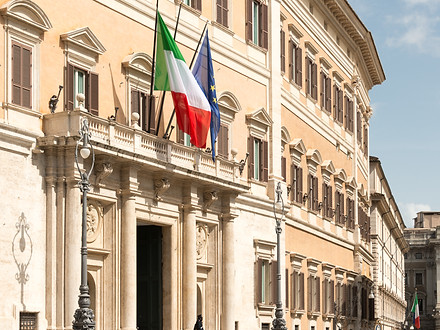
Institutions are increasingly present within corporate events: the application of ceremonial protocol can no longer be considered an optional element.
Knowing how to apply it means ensuring the right place for everyone, respecting the order of precedence, and giving the appropriate tone and rhythm to people, symbols and moments.
It is what allows an institution or a company to be represented with authority, without ever losing balance and sensitivity.
I design and coordinate ceremonies, official meetings and institutional events, taking care of their different aspects: from invitations to setups, from seating arrangements to the convivial moment.
Because when form is right, it becomes substance.
Etiquette
Live with elegance
Who has never wondered:
“What should I bring when I’m invited to dinner?”
“How should I write an invitation?”
“What should I wear for this event?”
These are questions everyone asks themselves — and they reveal one simple thing: the desire to make the right choice, without forcing anything.
Knowing etiquette serves exactly this purpose: to feel at ease in every context, naturally, understanding the reason behind things, and then deciding if and when to apply what many consider “old-fashioned customs.”
Etiquette is not a constraint, but a compass: it helps us move with ease, giving the right tone to gestures and words.
Because true elegance is not something to display: it is something you convey.

Business etiquette
Building relationships

Knowing how to manage one’s professional image has become essential in an era in which personal branding often counts almost as much as competence.
We are perceived through our behavior, both inside and outside the workplace, online and offline, and today more than ever soft skills — so central to business etiquette — truly make the difference.
Every smile, word, handshake or online message says something about us.
Taking care of these details is not a matter of style, but a way to turn every encounter into an opportunity for trust, credibility and authority.
Without ever forgetting gender equality, which has always been an integral part of business etiquette.